
Leave Your Message
Explore our top-tier industrial solutions engineered for high output and extreme durability.


The global construction industry is experiencing a massive paradigm shift. As sustainability, structural integrity, and cost-efficiency become the pillars of modern architecture, the demand for high-performance hollow block making machines has reached unprecedented heights. Hollow blocks have emerged as the preferred choice over traditional solid red bricks due to their lightweight properties, excellent thermal insulation, sound dampening capabilities, and reduced consumption of raw materials.
From rapid urbanization in emerging economies across Africa and Southeast Asia to infrastructural upgrades in Europe and the Americas, the hollow block manufacturing industry is scaling rapidly. Investors and block manufacturers are increasingly upgrading from manual casting methods to semi-automatic and fully automatic hydraulic block making machines to achieve consistent quality, high dimensional accuracy, and faster production cycles.
Shandong Shunya Machinery Co., Ltd has been specialzing in design,manufacture, block making machine,mixerand sale of moulds foy concrete polesconcrete mouids for pipe pies Wth advanced equipments, excelent professionaltechnology and 18-year of practical experience, R &: D department in block makingmachine market development is aiways been at the forefront of market in the developing of Block Making Machines, shunya is paying close atention to advancedlechnology at home and abroad, developing diferent products which are suitable to diferent investment needs from customers.
With the conception of high quaty and high eficiency, Shunya keeps the ideal of making its customers to get max. benefts, of going forward hand in hand tostriving for developments together.
Shandong Shunya Machinery Co., Ltd.
Modern hollow block manufacturing relies heavily on advanced hydraulic vibration technology. Unlike older mechanical models that relied purely on gravity and light compaction, today's machines utilize high-frequency, multi-directional vibration combined with hydraulic pressure. This ensures that the concrete mixture is densely compacted, eliminating air pockets and guaranteeing uniform strength throughout the block.
1. PLC Intelligent Control Systems: Integrated smart control panels allow operators to manage the entire cycle—from material feeding and mixing to pressing and pallet stacking—with minimal human intervention. This reduces labor costs and minimizes human errors.
2. Heavy-Duty Hydraulic Stations: A robust hydraulic system is essential for delivering the intense pressure required to form blocks that meet international structural standards. High-quality valves and seals prevent leaks and maintain consistent pressure cycles.
3. Customizable Mold Configurations: Versatility is crucial. Leading manufacturers provide interchangeable molds, enabling a single machine to produce hollow blocks, solid bricks, interlocking pavers, curbstones, and hourdi blocks simply by swapping the mold assembly.
Investing in a high-capacity automatic block machine like the QTJ4-25 or QT4-30 allows manufacturers to scale up production to thousands of blocks per shift. The automated feeding and quick molding cycle (typically between 15 to 25 seconds) ensure that raw materials are converted into marketable products at lightning speed, drastically shortening the payback period for your capital investment.
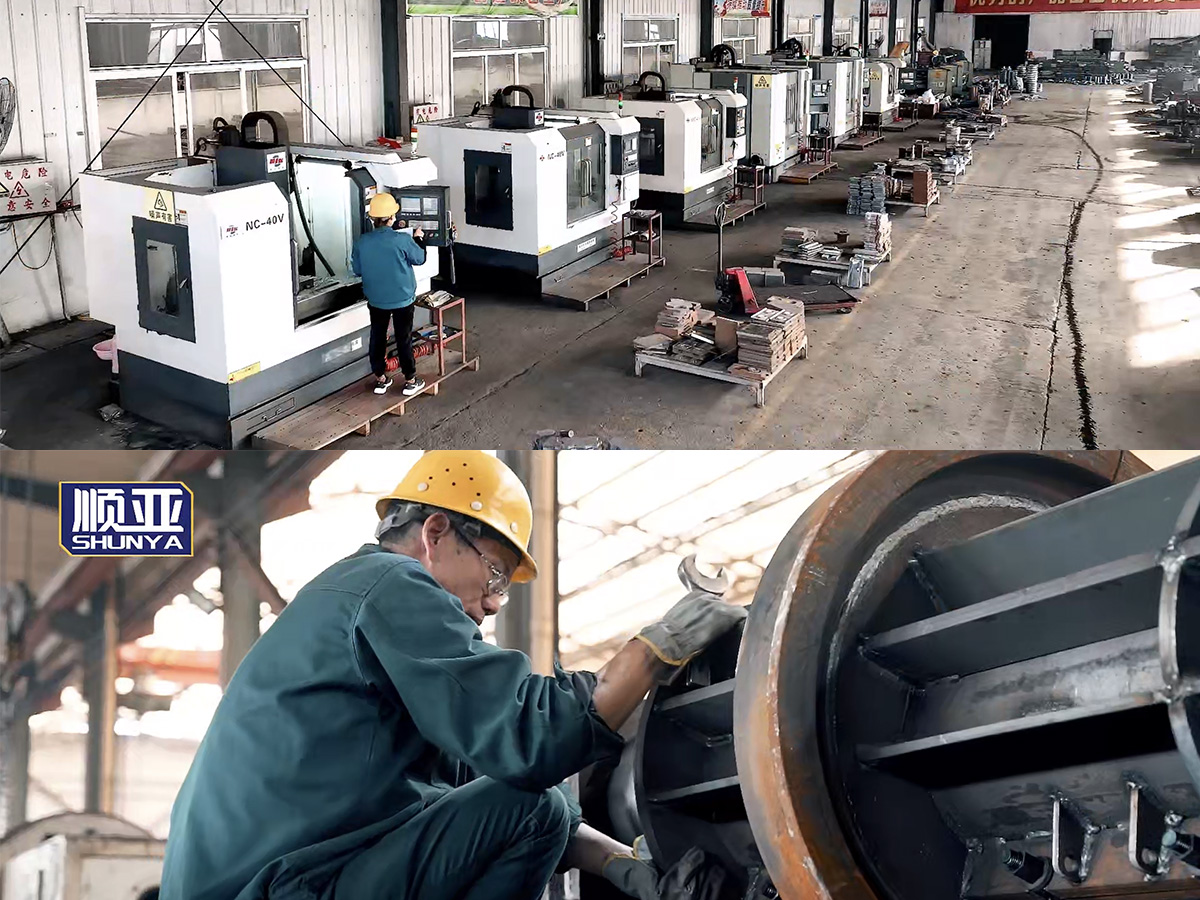
Hollow block manufacturing is not restricted to standard residential walling. The application spectrum has widened significantly, influenced by modern civil engineering demands and urban planning constraints.
In high-rise construction, reducing the dead load of the structure is a primary engineering objective. Hollow blocks, due to their internal voids, are significantly lighter than solid concrete blocks. Using them for partition walls reduces the load on the foundation and structural columns, allowing for more economical structural designs and saving steel reinforcement costs.
Specially designed interlocking hollow blocks are widely used in retaining wall systems. These blocks can be stacked without mortar in many cases, and their hollow cavities can be filled with gravel for drainage or reinforced with steel rebar and concrete for heavy-duty earth-retaining applications along highways, railways, and riverbanks.
Modern cities are adopting "Sponge City" concepts to manage stormwater runoff. Hollow blocks and grass-paver blocks manufactured by versatile block machines allow rainwater to percolate directly into the ground, reducing municipal drainage loads and preventing urban flooding while creating green, aesthetically pleasing parking lots and pedestrian pathways.
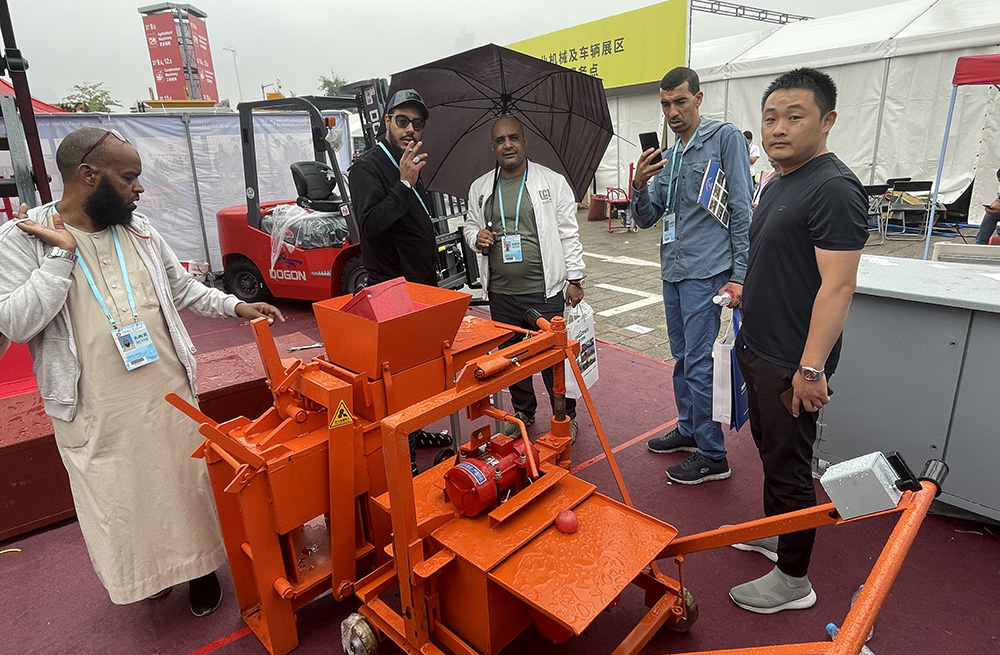
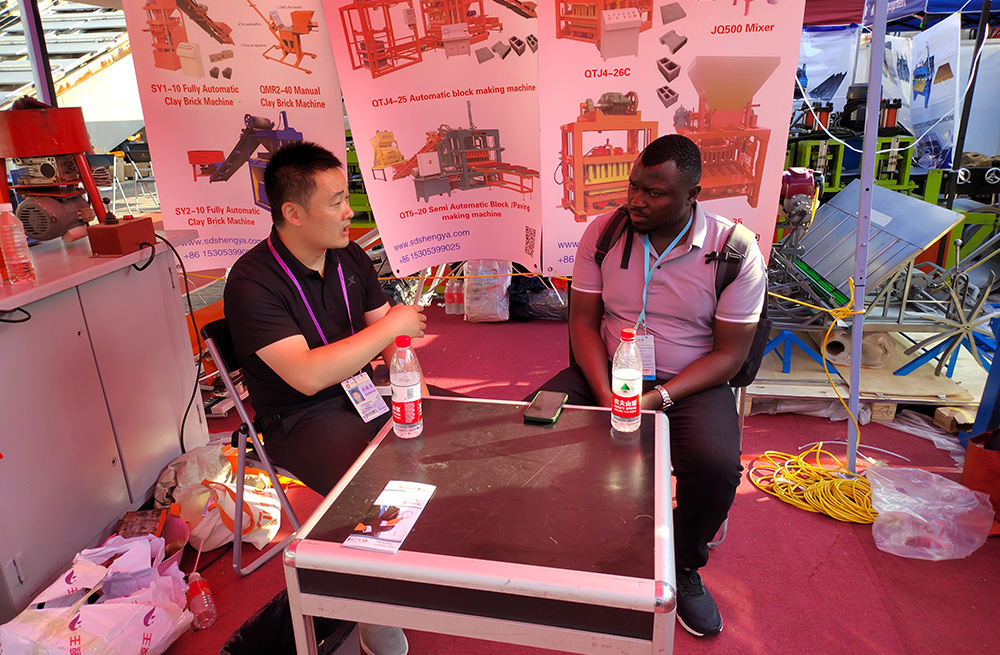
Showcasing our industrial expertise and machinery globally. We participate in major trade shows to connect with our international clients.


Engineering Corporaion Libyan project department, Sinohydro Bureau 13 company Zambia project depatment, Australan pineneedie Group for projects in Eat Timor, they al purchased shunya Block Making machines and set a nice and iong-ferm relationship with us. The company insists tothe people-oriented, qually first focus on the development of the intemational market All of these have certfed the development course of buiding an enterpnsethrough arduous effort, striving to make the enterprise prosperous, daring to win the first in making the first class by the shunya people.

Running a profitable hollow block manufacturing business requires more than just buying a high-quality block making machine. It demands careful attention to raw material selection, mix design, curing processes, and preventive machine maintenance.
The standard recipe for concrete hollow blocks consists of cement, sand, gravel (crushed stone), and water. However, locally available materials can drastically change the properties of the block. Incorporating fly ash or slag not only reduces cement usage but can also improve the workability of the mix and the surface finish of the blocks. Finding the perfect ratio through trial mixes is key to achieving target compressive strengths while minimizing production costs.
Freshly molded blocks must undergo proper curing to achieve their full design strength. In dry and hot climates, blocks should be kept under moisture cover (sprinkled with water and covered with plastic sheets) for at least 7 to 14 days. Improper curing leads to brittle blocks that crumble during transit or fail structural load tests, resulting in financial losses and reputational damage.
To ensure uninterrupted operation, a strict preventive maintenance schedule must be followed. Hydraulic oil levels and quality must be checked regularly, as contaminated oil can damage control valves and cylinders. Vibration components, bolts, and mold surfaces should be cleaned daily to prevent concrete buildup, which can cause dimensional inaccuracies in subsequent production runs.
Explore our comprehensive lineup of machinery tailored for diverse capacity and investment requirements.


